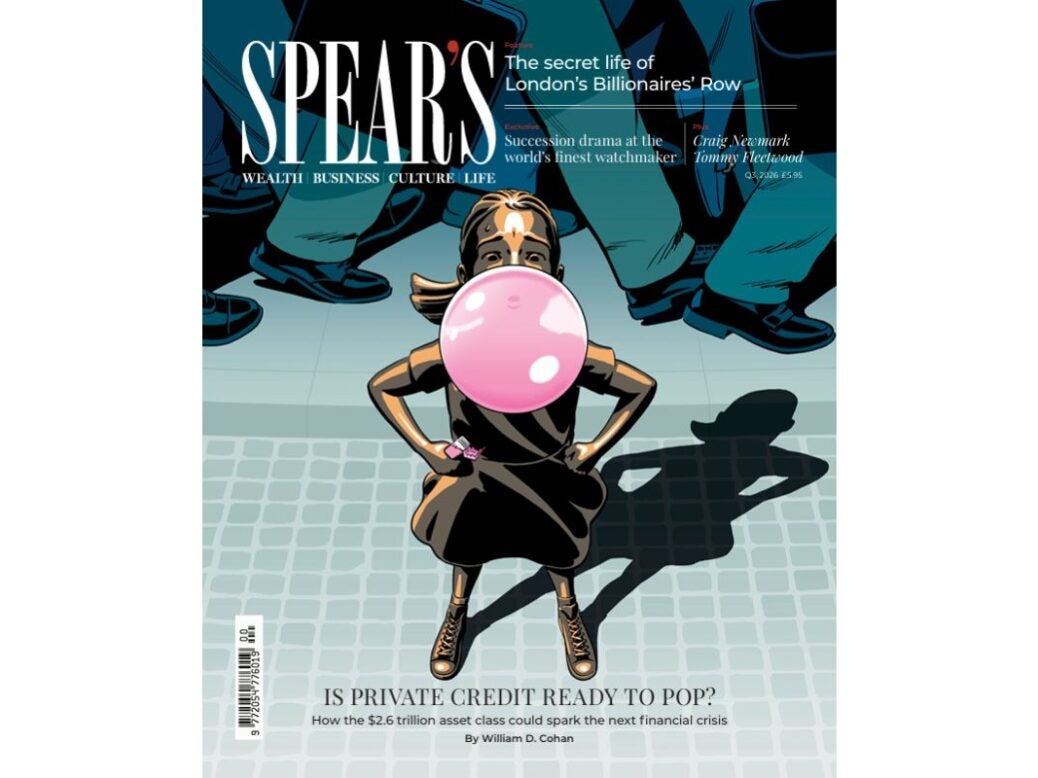
Private credit is ‘not a bubble’. So said Jim Zelter of private credit behemoth Apollo, when he was asked about it earlier this year. Big mistake.
Ask any politician and they’ll tell you: never, ever deny anything explicitly if you don’t really have to. It gives oxygen to the claim, even if it’s not true. (Some readers may recall this principle was explained in a Hunter S. Thompson anecdote from Lyndon B. Johnson’s work on the campaign trail in Texas early in his career. Although LBJ was said to have employed rather more choice language to make the point.)
It would be unfair to lay all of the blame for private credit’s current crisis of confidence at the feet of one man, of course.

This once-unglamorous corner of finance went through what some have referred to as a ‘golden age’ over the past few years, swelling from a total of $600 billion in 2015 to more than $2.6 trillion within a decade.
Related

The funds that investors – including family offices and individuals – bought into held loans that they believed to be well secured, well diversified and that appeared to provide extremely healthy returns relative to the risk. What could possibly go wrong? Well, a few things as it turns out. Not least the rise of AI.
There would be a certain poetic justice if the next major global financial crisis were triggered not by the implosion of a vast bubble in overvalued AI stocks, or by widespread unemployment arising from the magical technology’s wholesale adoption but, instead, by something far more prosaic: its impact on the bottom line of software companies that took on debt to finance their expansion.
[See also: Is the AI boom bursting wealth management’s bubble?]
As our cover story explains, this could well be the case.
Content from our partners


It’s a privilege to publish such a brilliant piece of writing, especially as it marks a debut in the pages of Spear’s of the veteran American business journalist William D. Cohan. Bill has written for the New York Times, Financial Times, Vanity Fair, Bloomberg and others. His 2022 book on General Electric (Power Failure) was widely acclaimed and he is currently working on a new tome, Money to Burn, about Leon Black and his firm Apollo – the standard bearer for private credit – that is not to be missed.
Our accompanying cover illustration also represents a Spear’s first for another star of US magazine publishing: R. Kikuo Johnson. Johnson’s work has been featured on the front of the New Yorker, as well as in the New York Times, on numerous occasions.
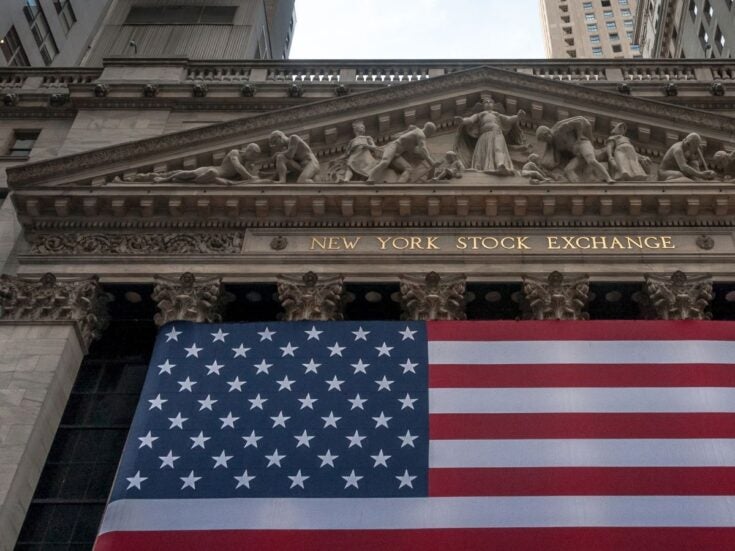
For Spear’s, he has conveyed the thesis of Bill’s feature – that there could be a bubble on Wall Street – by alluding to the famous Fearless Girl sculpture, which stands across from the New York Stock Exchange Building.
Elsewhere, US-based Belarusian-born billionaire Igor Tulchinsky speaks with me about his support of the British Museum’s highly anticipated (and somewhat controversial) blockbuster exhibition of the Bayeux Tapestry.
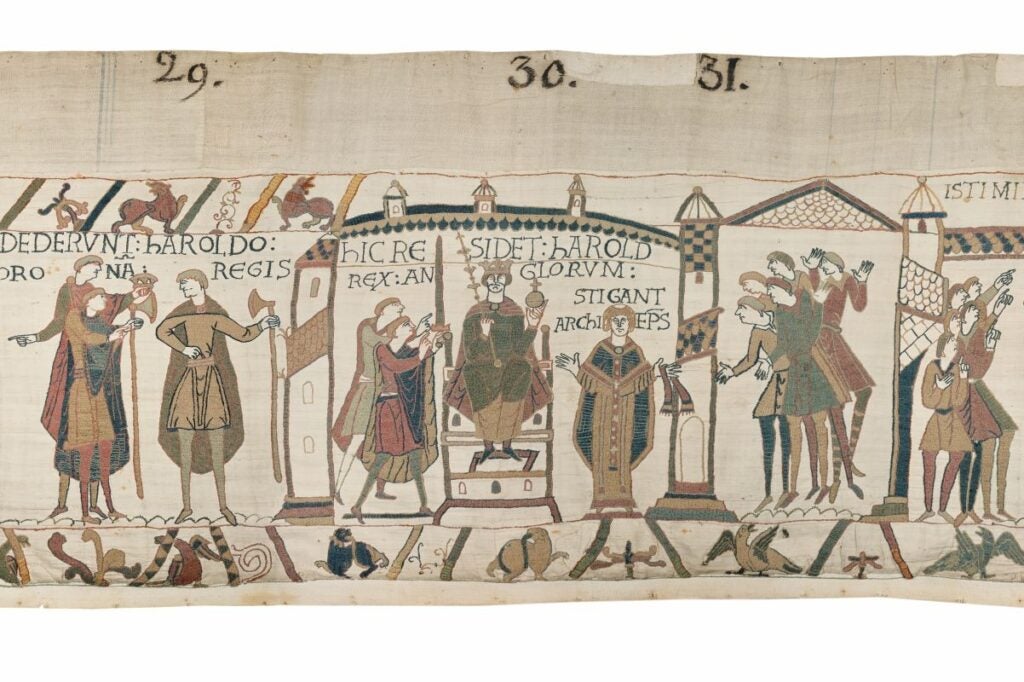
We also discussed his ambitious plans for his hedge fund, WorldQuant, to reach the $100 billion AUM mark, as well as the ways in which AI and quantum computing will affect its operations.
There’s a brace of exclusive interviews by my colleague Aisha Alli. She talks to Craigslist founder Craig Newmark about his $200 million commitment to supporting US army veterans and why he’s trying not to be judgemental about fellow billionaires; and you’ll find excerpts of her discussion with one-time bodyguard to Michael Jackson and Kendall Jenner, Simon Newton.
Not to be outdone, John Arlidge chimes in with his own billionaire interview in the form of a Liquid Lunch with Indian-born British rich lister Surinder Arora.
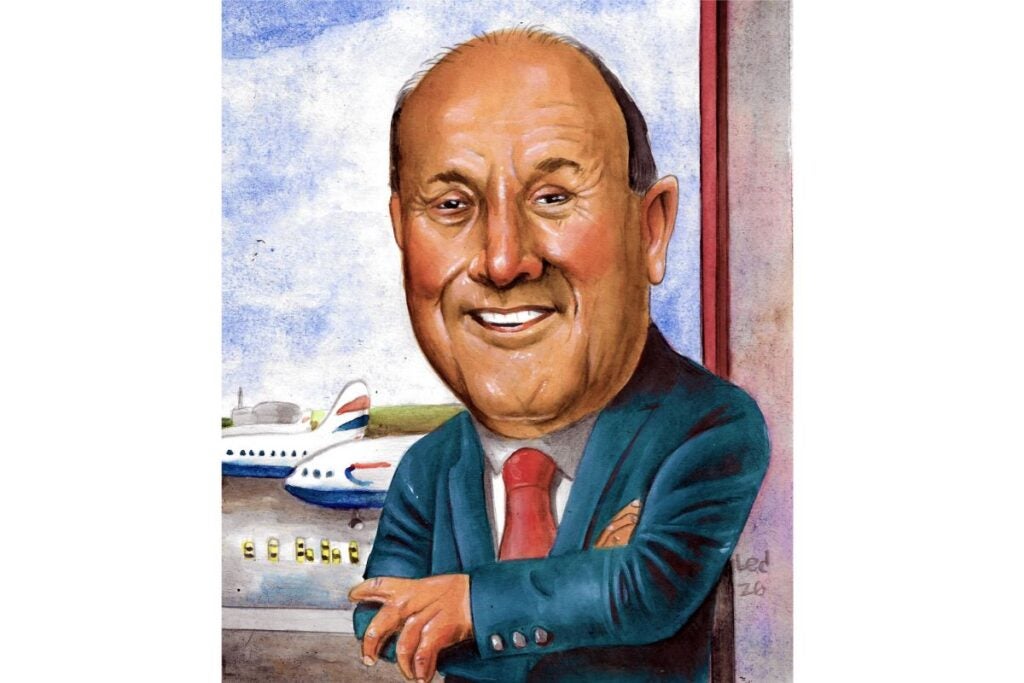
As John explains, the 67-year-old has racked up a huge number of business successes since he started his career on the bottom rungs of hospitality and wealth management (simultaneously), but is not content to rest on his laurels. Arora has a plan to shape the future of Heathrow with an alternative proposal for the long-awaited third runway, as well a still-developing hotel empire that now includes a luxury establishment in St James’s.
As ever, there is much, much more inside this edition of the magazine, which is the 100th in Spear’s history. But, like any good exponents of Test cricket, we know that passing such a milestone is a mere formality. The real work lies ahead, as we aim to compile an even bigger score, perhaps with even greater form and finesse. We’ll leave the real celebrations until our special 20th anniversary issue, which is coming in the autumn.
[Subscribe to Spear’s Magazine here]